
What Probate Covers in Wilkin County
Wilkin County probate matters include informal and formal estate administration, wills, personal representatives, inventories, accountings, guardianships, conservatorships, and related orders. The Minnesota Judicial Branch's probate help page explains how estates and trusts move through the system, and the Wilkin County District Court is the filing court for those cases in Breckenridge. For the statewide starting point, use the Minnesota probate help page.
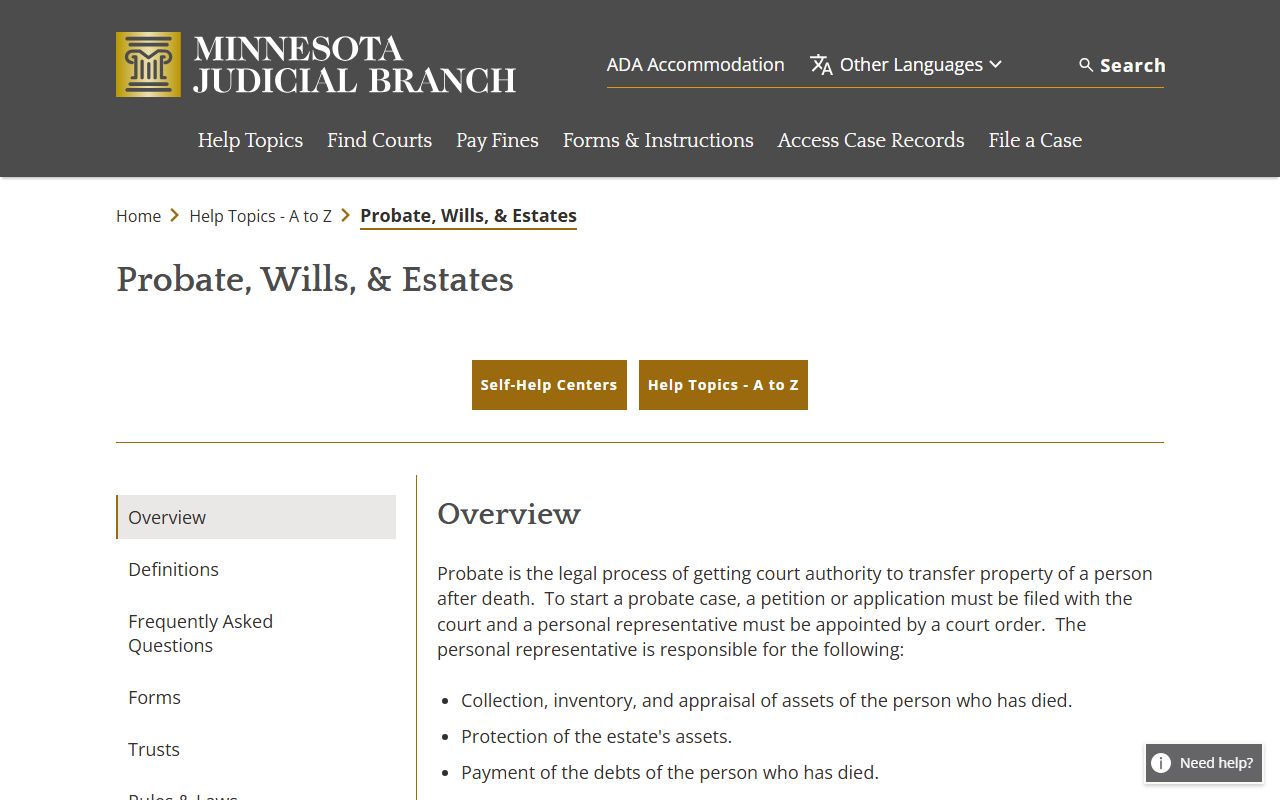
That help page is useful when a file is public but not yet easy to interpret, because it separates the probate process from the unrelated marriage, jail, and criminal records that other county offices keep. For Wilkin County, the practical in-person fallback remains Court Administration at the courthouse on South Fifth Street.
Probate Terms Defined
Probate filings use a small set of recurring terms. Knowing them makes it easier to read a Register of Actions, follow a petition, or understand why one case is informal while another is formal. The Minnesota Judicial Branch probate forms page is the best place to see the vocabulary used on current statewide paperwork.
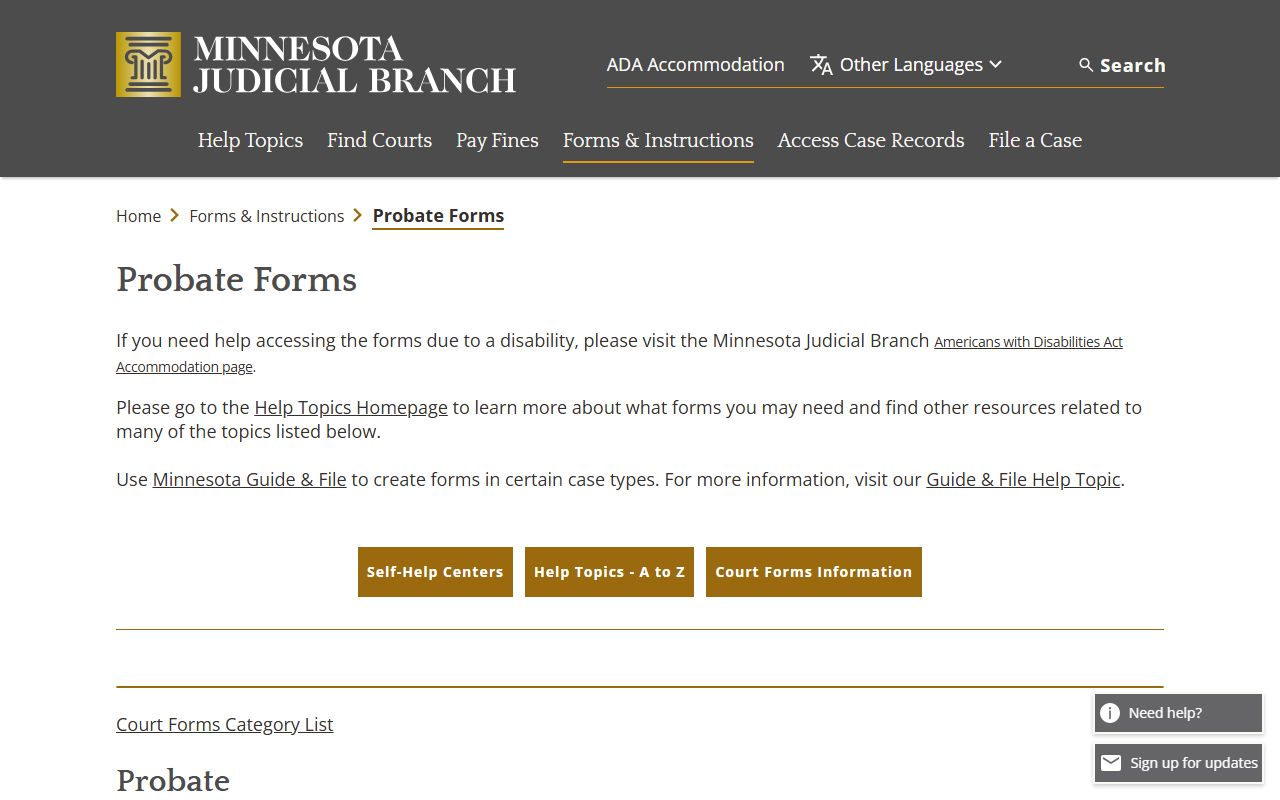
When a filing references a will, estate, or appointment, the forms page usually shows the same language the court expects on paper and in e-filing. That is helpful because probate terminology is precise and the court record often turns on the difference between a petition, an order, and letters issued to a representative.
- Testator
- The person who made the will.
- Executor
- The person named in a will to carry out the estate instructions.
- Intestate
- Without a valid will at death.
- Guardianship
- Court oversight of personal decisions for a protected person.
- Conservatorship
- Court oversight of financial affairs for a protected person.
How to Search Wilkin County Probate Division of District Court
Start with MCRO Case Search, then narrow by county, case category, and filing date when the name is common. Probate records in Minnesota are generally grouped under probate or mental health case categories, and Wilkin County uses the same statewide search tools as the rest of the judicial branch. If you need guardianship or conservatorship paperwork, the statewide forms page is the right companion source.
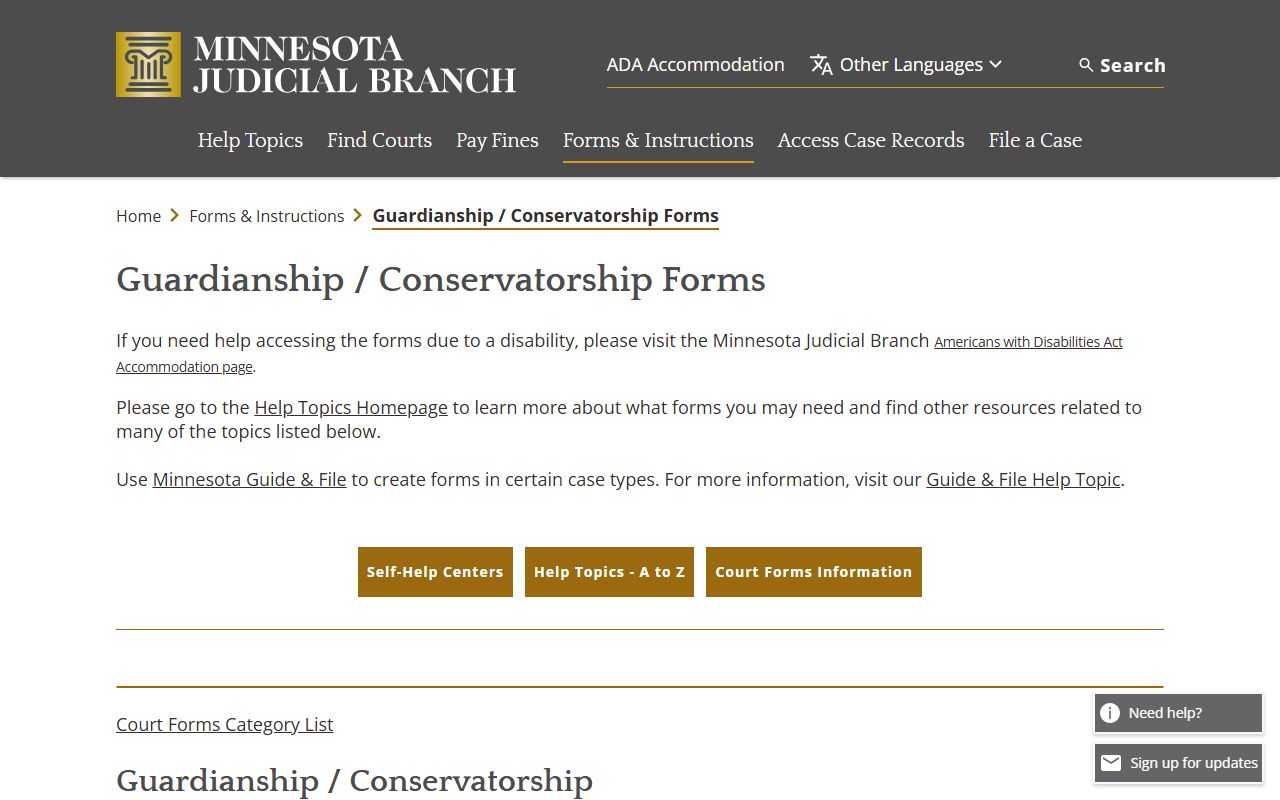
That forms page matters because many Wilkin probate searches turn on whether the matter is a simple estate, a guardianship, or a conservatorship. The online search tells you whether a file exists; the forms tell you which petition, notice, or order belongs in the record.
- Open MCRO Case Search and accept the terms if prompted.
- Choose Name or Case Number, then select Wilkin in the court locations filter.
- Use the Probate or Mental Health category when the record is an estate, guardianship, or conservatorship.
- Review the Register of Actions, then ask Court Administration for certified copies or older files.
Probate Courts in Wilkin County
Wilkin County does not have a separate probate courthouse. Probate matters go through Wilkin County District Court in Breckenridge, and the same office handles local court administration, case scheduling, and records requests. Use the courthouse for certified copies or case questions that are not answered in MCRO.
Wilkin County District Court
Probate Division of District Court
300 S. Fifth Street, PO Box 219
Breckenridge, MN 56520
218-517-6020
Monday-Friday, 8:00 a.m. to 4:30 p.m.
Probate Filing Fees
Wilkin County uses the Minnesota Judicial Branch fee schedule for district court probate matters. The amounts below are the local probate and copy fees most people need when opening an estate, requesting letters, or ordering certified copies.
| Item | Amount |
|---|---|
| Probate, estates, trusts, guardianships, conservatorships first paper | $310 |
| Will deposit / safekeeping | $27 |
| Certified copy | $14 |
| Exemplified plus certified copy | $28 |
| Uncertified civil or criminal document copy / printout | $0 |
What Wilkin County Probate Division of District Court Show
Probate files can show the petition, appointment papers, notices, inventories, accountings, orders, and the final steps that close an estate or protect a vulnerable adult. For small estates, Minnesota law sometimes allows collection by affidavit instead of a full probate case, which is why a search result may show no formal estate even though property was transferred through another process.
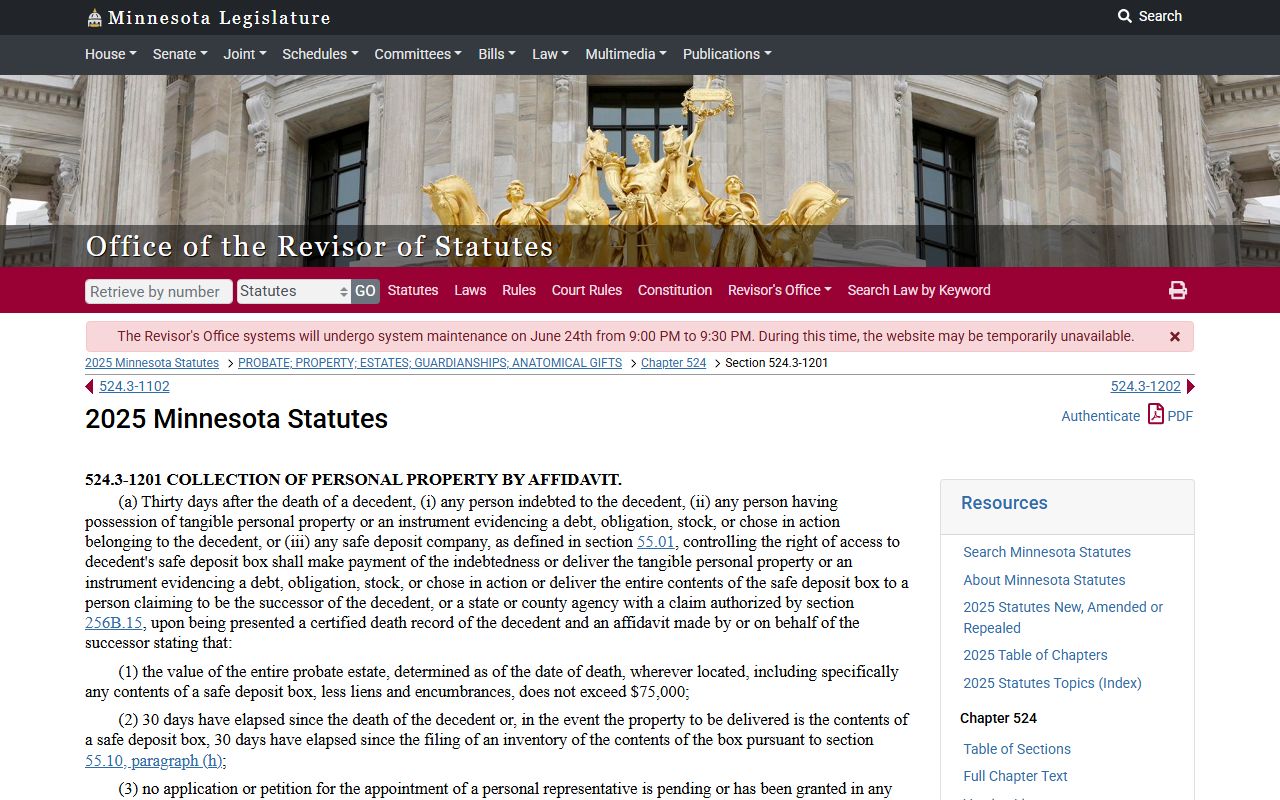
That statute is the practical threshold question for many Wilkin families. If the estate qualifies, the record trail may be shorter than a full probate file; if it does not, the District Court record usually contains the case progression from filing to closure.
Restricted Probate Division of District Court
Some probate-related records are not public in the same way as ordinary civil cases. Safekeeping wills, sealed guardianship material, protected-person details, and sensitive mental-health filings can be limited by the Minnesota Rules of Public Access and related statutes. Venue also matters: Minnesota probate venue usually begins in the county where the decedent was domiciled at death.
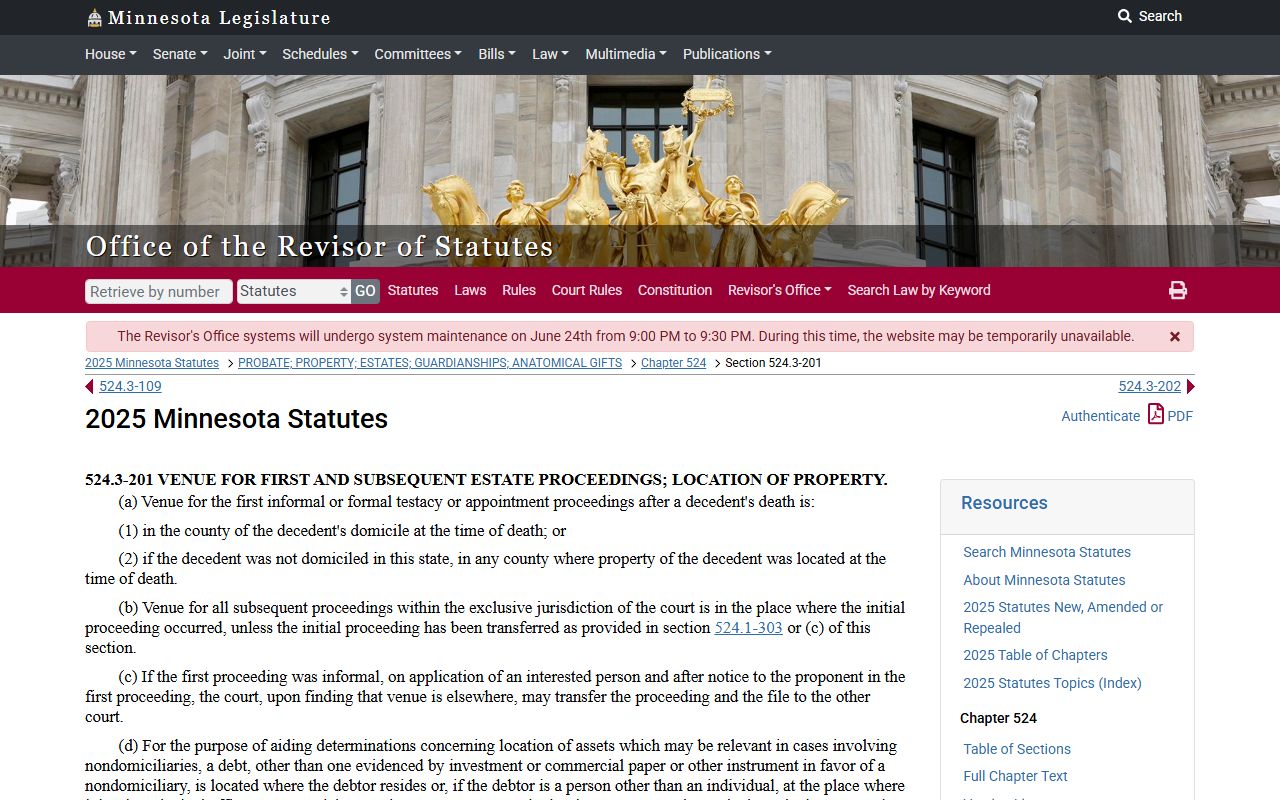
For Wilkin County users, the venue rule is the piece that explains why an estate file belongs here rather than in another county. If the decedent was not domiciled in Minnesota, venue can move with property location, so the record may point to a different courthouse even when the person lived near Breckenridge.
The small-estate affidavit rule is another practical filter. If the estate qualifies under Minnesota law, a family may be able to transfer property without opening a full probate file, which shortens the public record trail. When a full probate file does exist, however, the District Court docket usually shows the appointment, notices, inventory, and closing steps that follow the first petition.